
In Islam, Tawheed — the belief in the Oneness of Allah — is the foundation of faith. Every act of worship, from prayer to charity, is built upon this central belief.
However, one of the greatest dangers to this foundation is Shirk — associating partners with Allah in worship, love, or trust.
While major Shirk (Ash-Shirk al-Akbar) is clear and easy to recognize, minor Shirk (Ash-Shirk al-Asghar) is often hidden and can easily enter a person’s life without them realizing it.
Understanding the types of Shirk and how to avoid them helps Muslims keep their worship sincere and their relationship with Allah pure.
What Is Shirk?
The Arabic word Shirk means “to associate” or “to share.”
In Islamic belief, Shirk refers to associating anyone or anything with Allah in His Lordship, Worship, or Names and Attributes.
It is the opposite of Tawheed — the pure monotheism that defines Islam.
Allah says in the Qur’an:
“Indeed, Allah does not forgive association with Him, but He forgives what is less than that for whom He wills.”
(Surah An-Nisa 4:48)
This verse shows the seriousness of Shirk and the need for every Muslim to understand it clearly.
Types of Shirk
Islamic scholars classify Shirk into two main types: Major Shirk and Minor Shirk.
Both are dangerous, but their effects on a person’s faith are different.
1️⃣ Major Shirk (Ash-Shirk al-Akbar)
Definition:
Major Shirk means directing any act of worship, such as prayer, dua, or sacrifice, to someone other than Allah.
It removes a person completely from the fold of Islam.
Examples of Major Shirk:
- Believing in good or bad luck independent of Allah’s will.
- Calling upon saints, prophets, or the dead for help.
- Offering sacrifices to graves or shrines.
- Believing that someone other than Allah controls benefit or harm.
Why It’s Dangerous:
Major Shirk nullifies all good deeds and leads to eternal loss if a person dies without repentance.
It is the greatest injustice a human can commit, as it gives Allah’s rights to someone else.
2️⃣ Minor Shirk (Ash-Shirk al-Asghar)
Definition:
Minor Shirk includes any action, word, or intention that can lead to major Shirk, or that affects the sincerity of worship.
It does not take a person out of Islam but reduces the reward of good deeds and weakens one’s Tawheed.
Prophetic Warning:
The Prophet Muhammad ﷺ said:
“The thing I fear most for you is minor Shirk: showing off.”
(Musnad Ahmad)
This shows how subtle minor Shirk can be — sometimes it hides in our intentions or words.
Common Examples of Minor Shirk People Do Without Realizing
Here are some everyday actions that may fall under minor Shirk, often done unintentionally:
🔹 1. Swearing by other than Allah
Phrases like “I swear by your life,” or “By the Prophet” are very common, but the Prophet ﷺ said:
“Whoever swears by other than Allah has committed Shirk.” (Abu Dawood)
A Muslim should say: “By Allah” only.
🔹 2. Showing off in worship (Riya’)
Doing acts of worship for people’s praise — such as praying beautifully because someone is watching — takes away sincerity and makes the action invalid.
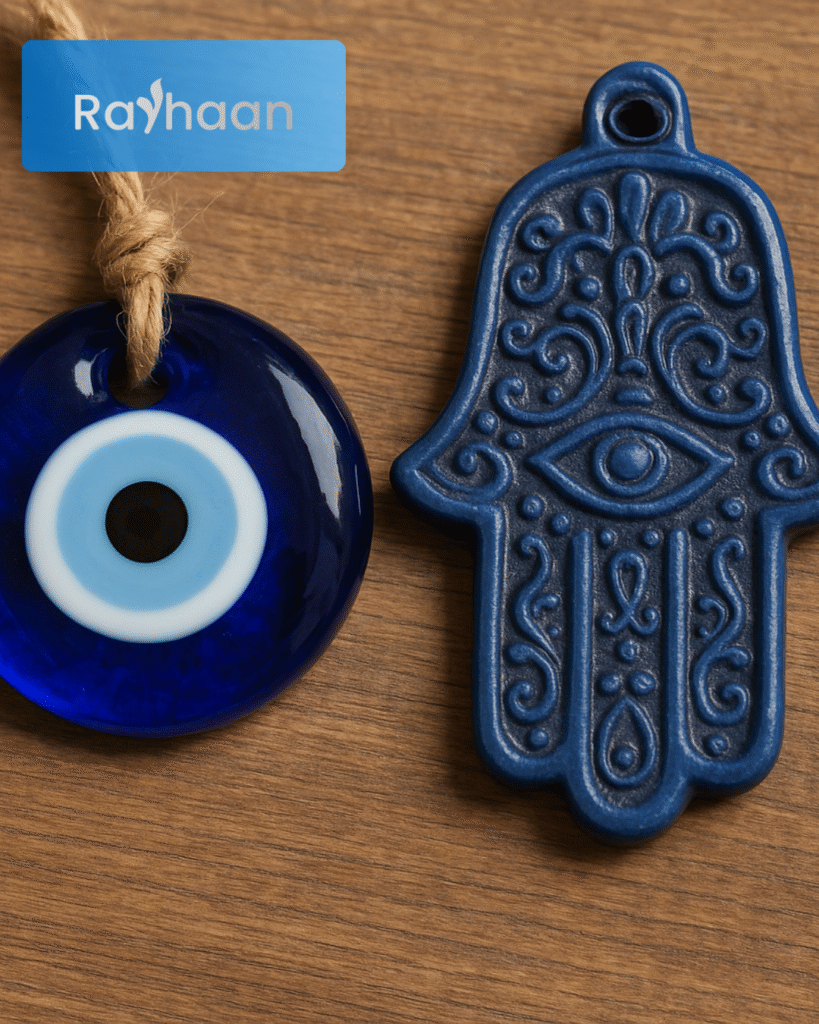
🔹 3. Wearing amulets or charms for protection
Many people wear bracelets, strings, or papers with symbols or verses believing they protect from evil.
Protection belongs to Allah alone, not to objects.
🔹 4. Relying on people instead of Allah
Saying “If it weren’t for my job, I wouldn’t survive” without remembering Allah’s will is a subtle form of minor Shirk.
A believer should say: “If it weren’t for Allah, then so-and-so.”
🔹 5. Believing in bad omens
Feeling unlucky because of a specific day, color, or number (like “Friday the 13th”) is a form of Tiyarah — a belief condemned in Islam.
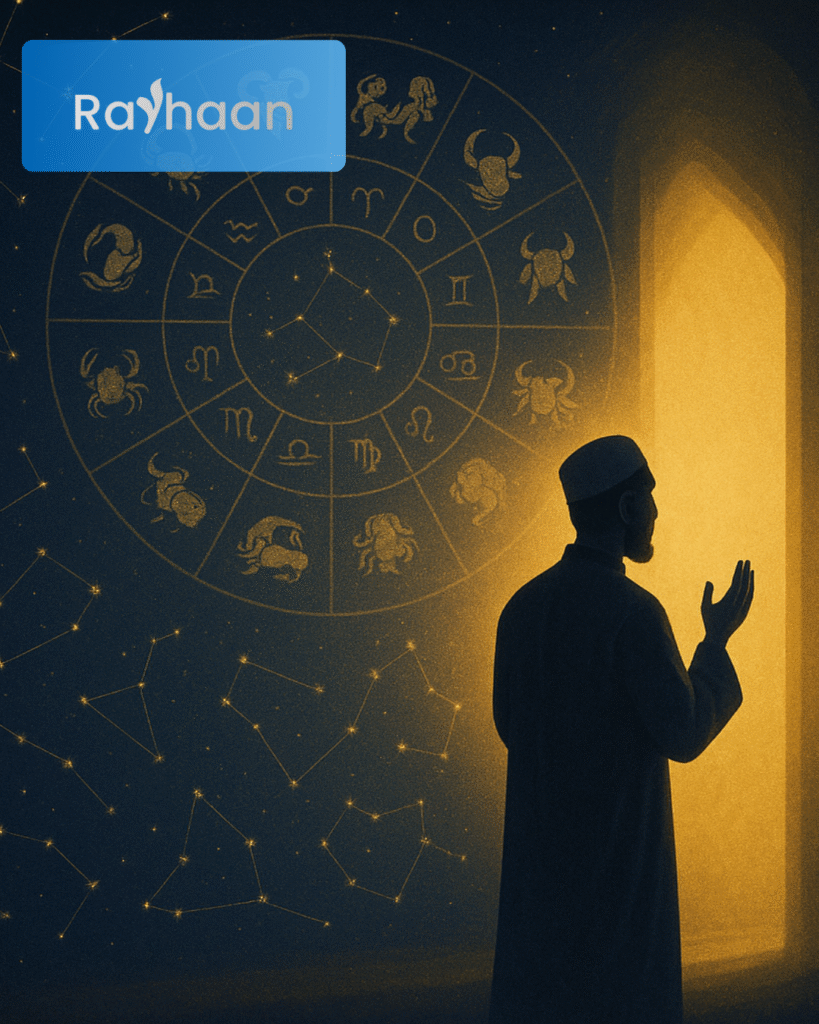
🔹 6. Reading horoscopes or trusting zodiac signs
Believing that stars or planets affect our personality or future contradicts Islamic belief in Qadr (Divine Decree).
🔹 7. Excessive trust in material causes
When someone depends only on medicine, money, or people — and forgets that Allah is the ultimate cause — this weakens Tawheed.
How to Protect Yourself from Shirk
Avoiding Shirk is not just about avoiding certain actions — it’s about training the heart to rely only on Allah, keeping our intention pure, and always being aware of what might lead us away from Tawheed.
Here are practical and spiritual steps every Muslim can take to stay safe from all forms of Shirk — both major and minor.
1. Learn and Understand Tawheed Deeply
The first protection from Shirk is knowledge.
When you truly understand what Tawheed means — that Allah alone deserves worship, love, fear, and reliance — you naturally reject anything that competes with Him.
Study the meanings of Allah’s Names and Attributes (Asma’ wa Sifat). Reflect on His Power, Mercy, and Wisdom. When your heart knows Allah well, it becomes impossible to associate anything with Him.
📖 Tip: Read books or attend online courses on Islamic Aqeedah (belief), especially those explaining Tawheed al-Uluhiyyah (Oneness in worship) and Tawheed ar-Rububiyyah (Oneness in Lordship). { click HERE to book a free trial class with one of our excellent teachers}
The stronger your understanding, the safer you are from hidden forms of Shirk.
2. Purify Your Intention (Niyyah) Constantly
Many forms of minor Shirk start in the heart — especially Riya’ (showing off).
Before you pray, give charity, or teach, ask yourself: Am I doing this for Allah or for people’s praise?
Renewing your intention keeps your heart connected to Allah, not to people’s opinions.
Even if you notice some pride or showing off, correct it immediately and seek forgiveness.
🕊 Remember: The Prophet ﷺ said,
“Actions are only by intentions.” (Bukhari & Muslim)
So a sincere intention turns small deeds into acts of worship, and an insincere one can destroy great deeds.
3. Strengthen Your Relationship with Allah Through Dhikr and Du’a
A heart that constantly remembers Allah (Dhikr) is protected from whisperings of Shirk and doubts.
Make it a habit to say the morning and evening adhkar, especially:
“La ilaha illa Allah, wahdahu la sharika lah…”
(“There is no god but Allah, alone, with no partner.”)
Also, regularly make the prophetic dua:
“O Allah, I seek refuge in You from associating anything with You knowingly,
and I seek Your forgiveness for what I do unknowingly.”
(Ahmad)
This dua directly protects you from both conscious and hidden forms of Shirk.

4. Avoid Words and Expressions That Lead to Shirk
Sometimes, Shirk begins in language.
Be careful with common phrases like:
- “If it weren’t for you, this wouldn’t have happened.”
- “By your life!”
- “This object protects me.”
- This is for “Good luck”
Replace them with correct phrases such as:
- “If it weren’t for Allah, then you.”
- “By Allah.”
- “Allah protected me through this.”
- ” cross your fingers”
Changing the way we speak helps purify our beliefs and keeps our hearts aware that everything happens by Allah’s will.
5. Trust Allah Completely (Tawakkul)
True Tawakkul means using the means but believing that only Allah controls the results.
Take your medicine, apply for your job, save your money — but your heart should depend only on Allah, not on the means.
When we rely too much on people, objects, or plans, we slowly replace Allah’s place in our hearts.
Remind yourself daily:
“Allah is sufficient for me, and He is the best disposer of affairs.”
(Qur’an 3:173)
6. Keep Righteous Company
Being around people who remind you of Allah helps you notice mistakes early.
Good friends advise with wisdom when they see something wrong — like superstitious behavior, careless words, or acts that resemble Shirk.
On the other hand, bad company normalizes these acts and may lead you to ignore them.
Join gatherings of remembrance, study circles, or online Islamic communities that strengthen faith and understanding.
8. Make Continuous Istighfar (Seeking Forgiveness)
Every believer makes mistakes — sometimes without realizing it.
That’s why the Prophet ﷺ, who was sinless, used to say Astaghfirullah more than 70 times a day.
Regular Istighfar cleans the heart from hidden sins like pride, showing off, or over-reliance on worldly causes.
It’s the believer’s way of washing off any trace of Shirk before it grows.
Final Thought
Protecting yourself from Shirk is a lifelong journey of learning, reflection, and self-purification.
It’s not about fear — it’s about love.
When your love, hope, and trust are directed only to Allah, your heart becomes at peace, your worship becomes sincere, and your life becomes full of barakah (blessing).
Conclusion
Shirk is not only about idol worship — it’s about anything that shares the place of Allah in our hearts, trust, or worship.
Major or minor, every form of Shirk damages a Muslim’s relationship with their Creator.
By learning, reflecting, and purifying our intentions, we can protect our Tawheed and strengthen our connection with Allah.
May Allah keep our hearts sincere and protect us from all forms of Shirk — known and unknown.
Ameen.