1. Introduction: What is Umrah?
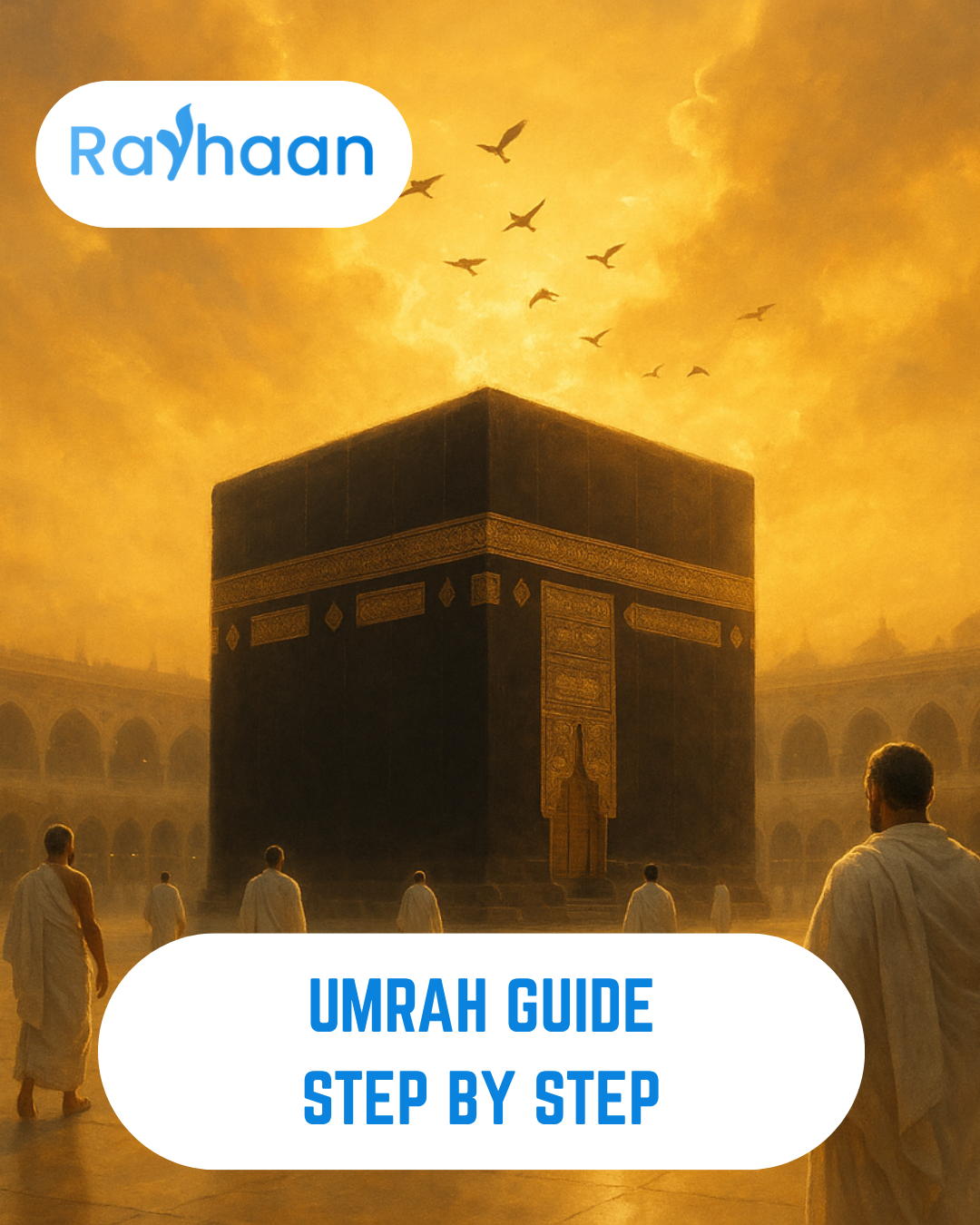
Umrah is a blessed act of worship and a form of pilgrimage to the holy city of Makkah. It’s often called the “minor pilgrimage”, while Hajj is the “major pilgrimage”.
Unlike Hajj, which has specific dates, Umrah can be performed any time of the year. It’s a beautiful journey of purification, forgiveness, and renewal of faith.
The Prophet ﷺ said:
“From one Umrah to another is an expiation for what is between them.”
(Sahih Bukhari)
2. Preparing for Umrah: Intention and Ihram.
What is Ihram?
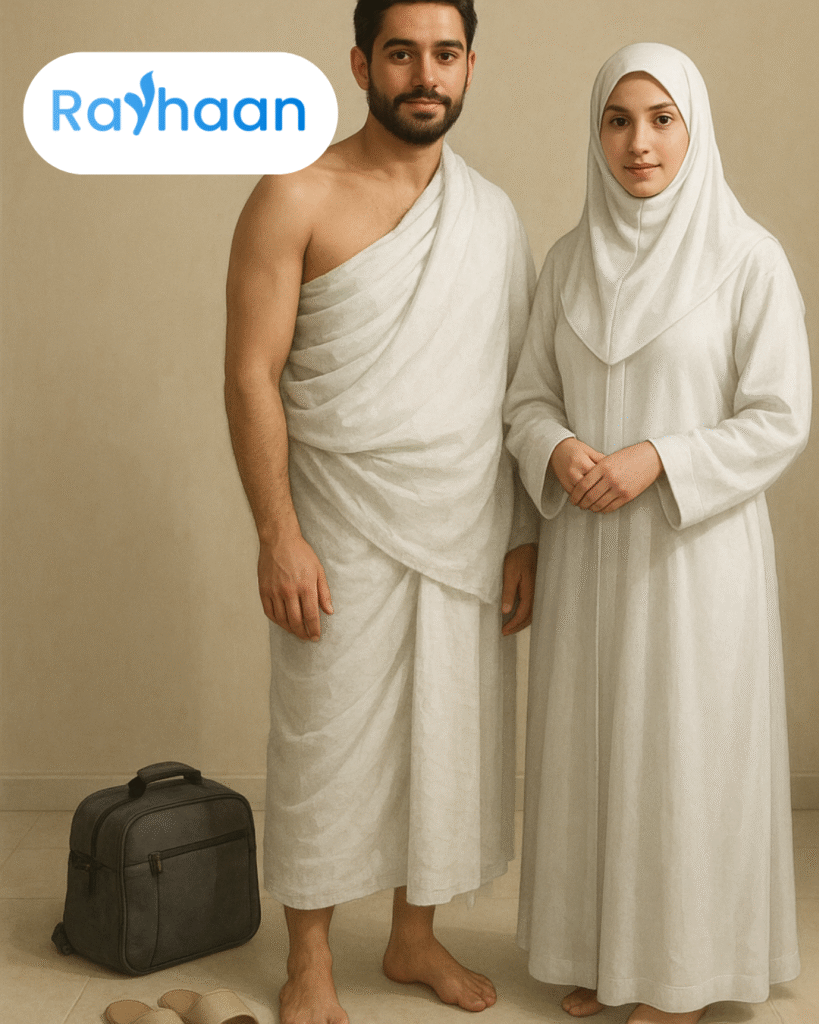
Ihram is a sacred state of purity a Muslim enters before starting the rituals of Umrah. It involves making the intention (niyyah) and wearing special clothing.
- For men: Two white, unstitched cloths — one for the waist and one over the shoulders.
- For women: Any modest clothing that covers the body properly (no specific color required).
Before entering Ihram:
- Take a ghusl (ritual bath).
- Trim nails and hair if needed.
- Apply perfume (for men only, before wearing Ihram).
- Pray two rak‘ahs if possible.
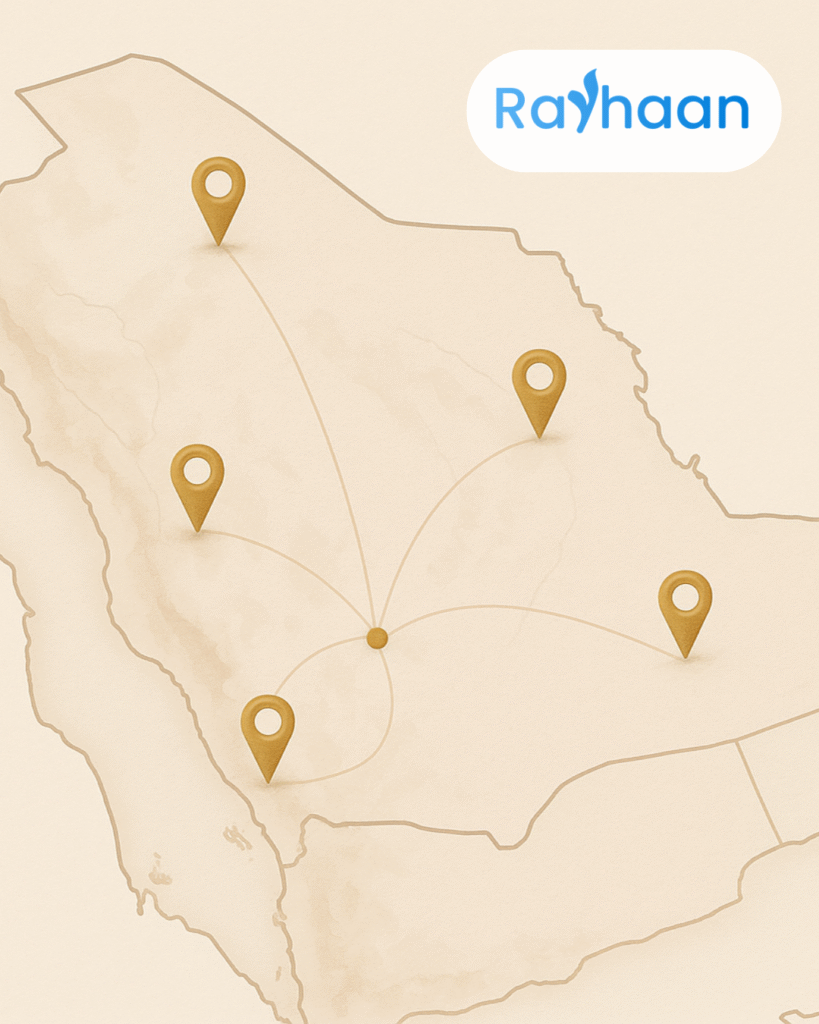
Miqat (The starting point)
Miqat refers to specific geographical points from which pilgrims must enter into Ihram before reaching Makkah. If you pass the Miqat without Ihram, you must return or offer a sacrifice.
3. Steps to Perform Umrah
Step 1: Enter Ihram and Recite Talbiyah:
After wearing Ihram and making intention, recite the Talbiyah:
“Labbayk Allahumma Umrah.”
(Here I am, O Allah, for Umrah.)
Then keep saying:
“Labbayk Allahumma Labbayk, Labbayka la shareeka laka Labbayk, Innal hamda, wan-ni‘mata, laka wal mulk, la shareeka lak.”
Meaning: “Here I am, O Allah, here I am. There is no partner for You. Truly, all praise, blessings, and sovereignty are Yours.”
Step 2: Tawaf (Circumambulation of the Ka’bah):
When you enter Masjid al-Haram, step in with your right foot and say:
“Allahumma iftah li abwaba rahmatik” (O Allah, open for me the doors of Your mercy).
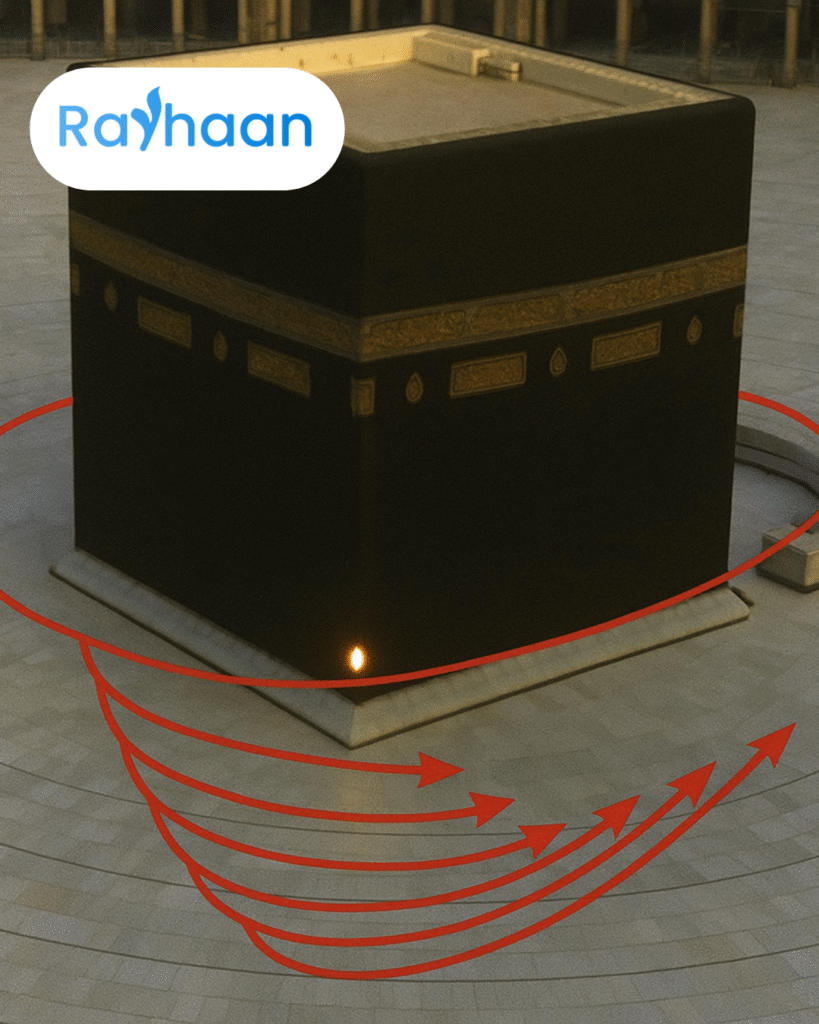
Then proceed to the Ka’bah and start Tawaf — walking around it seven times counterclockwise, beginning from the Black Stone (Hajr al-Aswad).
- If possible, touch or point toward the Black Stone each round and say: “Bismillah, Allahu Akbar.”
- Men uncover their right shoulder (Idtiba) and walk briskly (Ramal) in the first three rounds.
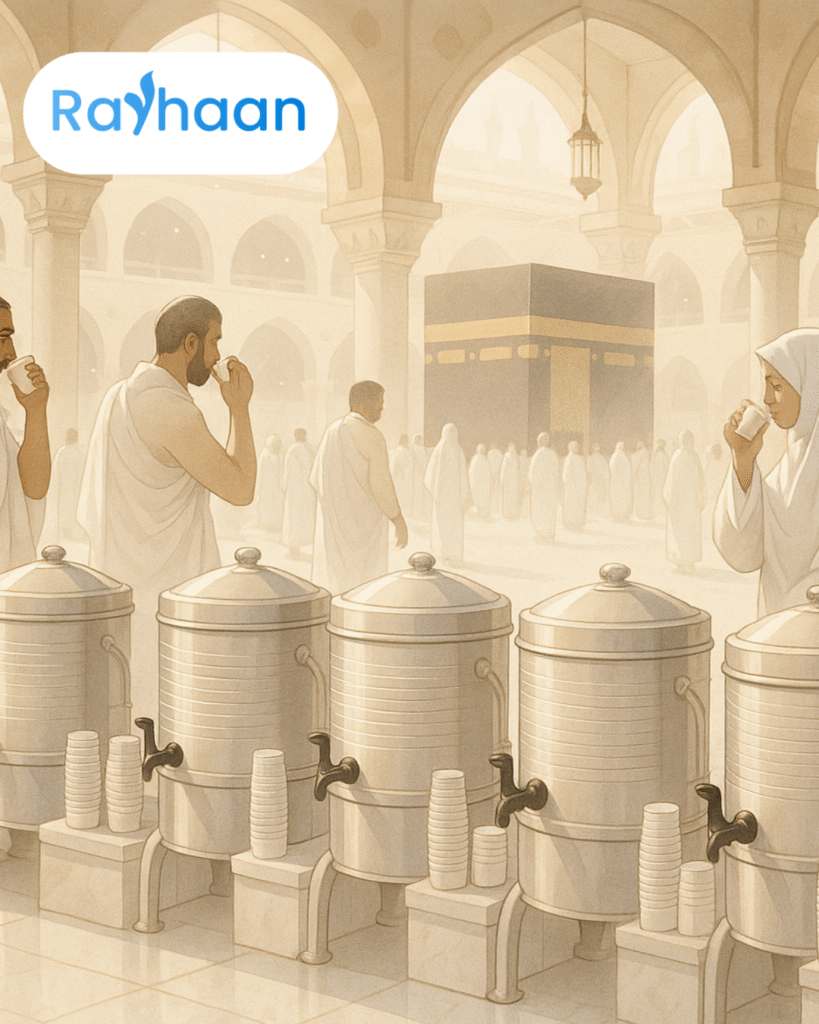
After completing seven rounds, pray two rak‘ahs behind Maqam Ibrahim if possible, and drink Zamzam water.
Step 3: Sa’i Between Safa and Marwah:
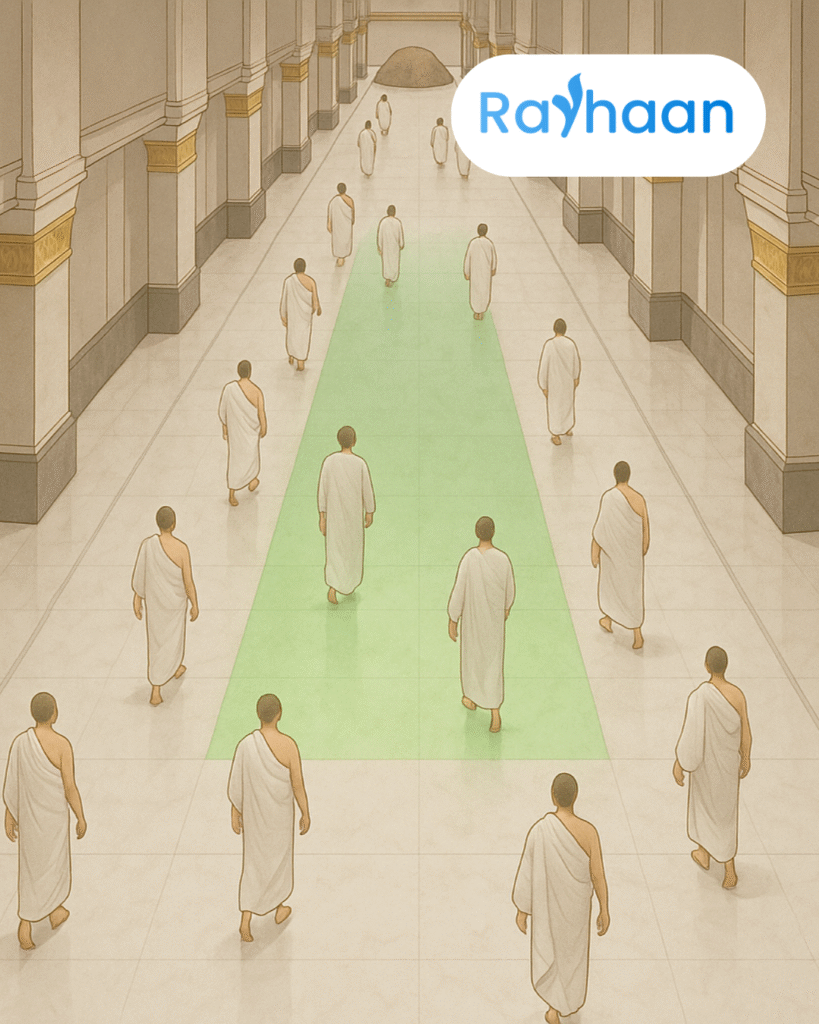
After Tawaf, go to Safa Hill to begin Sa’i — walking seven times between Safa and Marwah.
When you reach Safa, face the Ka’bah and say:
“Indeed, Safa and Marwah are among the symbols of Allah…” (Qur’an 2:158)
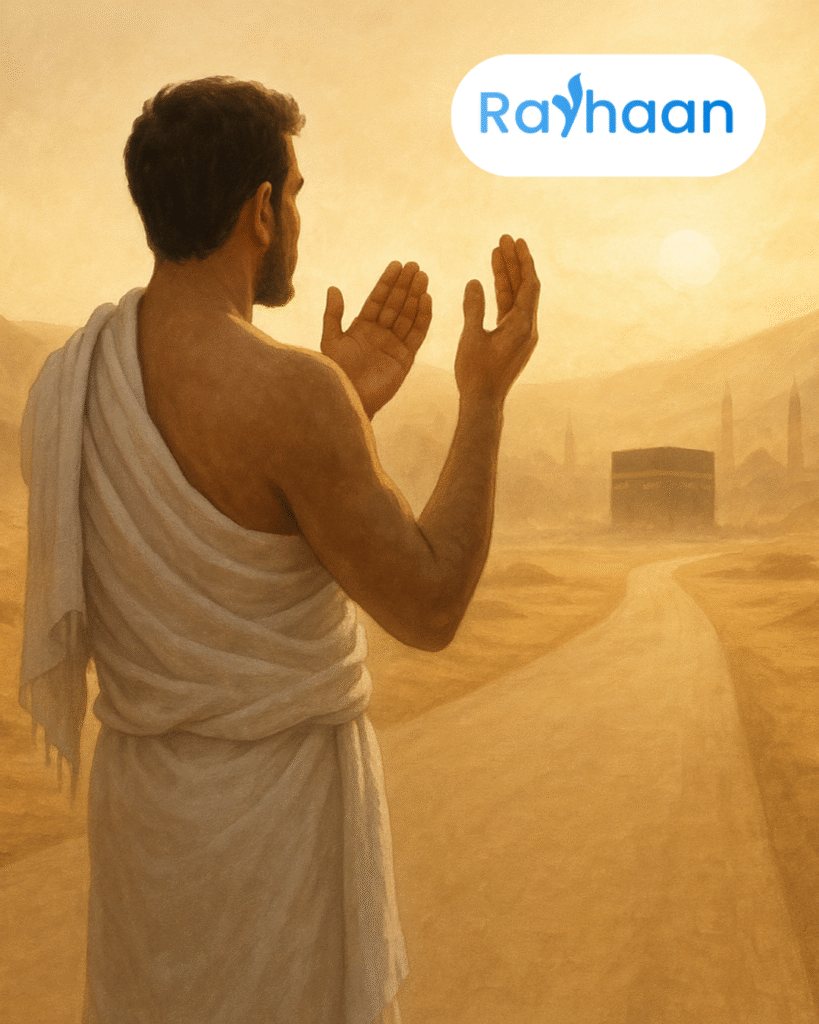
Raise your hands and make dua for yourself and your family.
Walk normally between the two hills, but men jog lightly between the green lights.
Each trip from Safa to Marwah counts as one; seven rounds end at Marwah.
In the Masjid, both Safa and Marwah are clearly marked with signs saying “As-Safa” and “Al-Marwah,” so you’ll easily know where to start.
Step 4: Shaving or Trimming the Hair (Halq or Taqsir):
When you finish Sa’i:
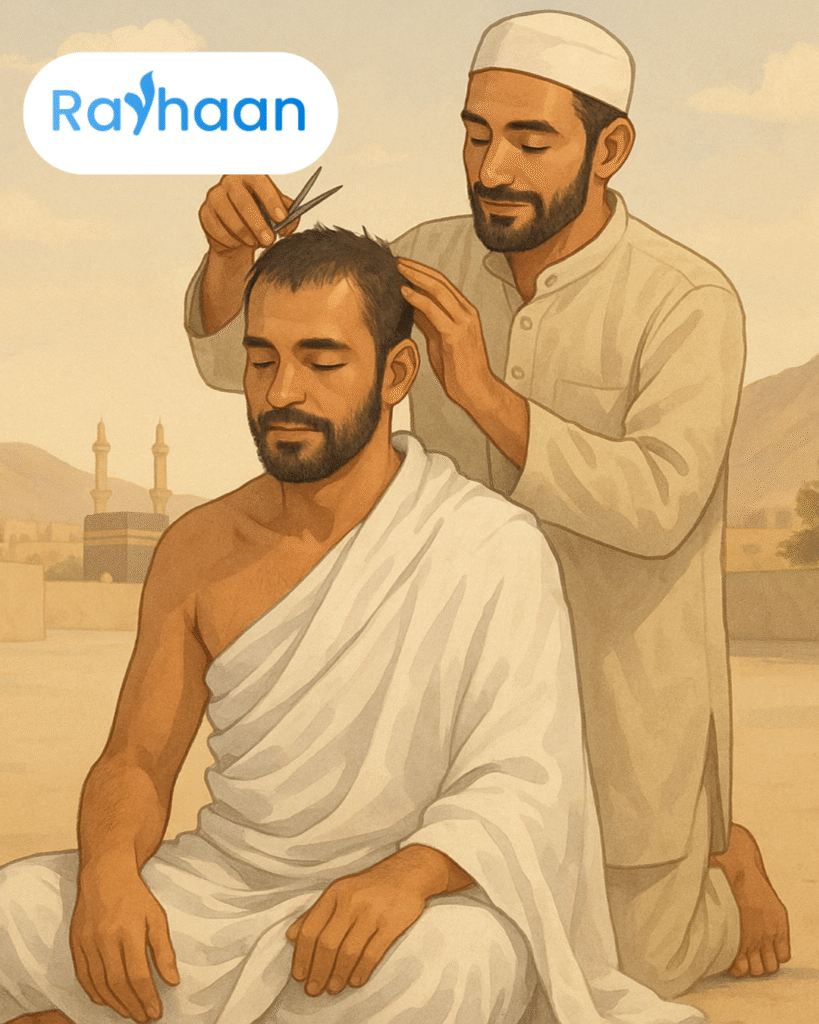
- Men: Shave (Halq) or shorten (Taqsir) their hair all around the head.
- Women: Cut a small portion (around one inch) from the end of each braid.
After this step, you exit Ihram, and your Umrah is complete!
4. Pillars of Umrah (Arkan al-Umrah):
| Pillar | Description |
|---|---|
| Ihram | Entering the sacred state with intention |
| Tawaf | Circumambulating the Ka’bah seven times |
| Sa’i | Walking between Safa and Marwah seven times |
| Halq or Taqsir | Trimming or shaving hair |
5. Sunnah Acts of Umrah:
These are recommended actions that increase the reward:
- Making lots of du’a throughout.
- Performing ghusl before Ihram.
- Praying two rak‘ahs before Ihram.
- Frequently reciting Talbiyah.
- Touching or kissing the Black Stone (if safe).
- Drinking Zamzam water.
6. Things That Invalidate or Violate Umrah:
Avoid the following during Umrah:
- Marital relations before completing all rituals.
- Shaving/cutting hair before Sa’i.
- Removing Ihram before finishing.
- Skipping any pillar (Ihram, Tawaf, Sa’i).
- loosing Wudu during Tawaf.
7. Duas During Umrah:
Here are some recommended supplications for each part of Umrah:
| Moment | Dua / Supplication |
|---|---|
| Entering Masjid al-Haram | Allahumma iftah li abwaba rahmatik |
| At the Black Stone | Bismillah, Allahu Akbar |
| Between Yemeni Corner & Black Stone | Rabbana atina fid-dunya hasanah, wa fil-akhirati hasanah, wa qina ‘adhaban-nar |
| On Safa & Marwah | Make any personal dua |
| After finishing Umrah | Allahumma taqabbal minni Umrati, waghfir li zunubi |
Common Questions About Umrah (FAQ)
Q1: Can I perform more than one Umrah in the same trip?
Yes, but each Umrah requires a new Ihram from outside the Haram area (like Masjid Aishah).
Q2: Is visiting Masjid an-Nabawi mandatory after Umrah?
It’s not required for Umrah, but it’s highly recommended and a great opportunity for reward.
Q3: Can I perform Umrah on behalf of someone else?
Yes, you may do Umrah for a deceased or living person (with their permission).
Q4: What should a woman do if she gets her period during Umrah?
She should wait until she becomes pure again. She can perform other acts of worship but must not perform Tawaf while menstruating.
Q5: What’s the best time to perform Umrah?
Any time of the year, but performing in Ramadan carries great reward — “Umrah in Ramadan equals Hajj with me,” said the Prophet ﷺ.
Q6: Is Umrah valid if I didn’t shave completely?
Yes, as long as you shortened hair from all parts of the head.
Q7: Can I wear normal clothes if I don’t have Ihram garments?
For men, the two white cloths are essential; when you finished your Umrah and exit the state of Ihram you can wear any types of clothing in the masjid.
Final Tips for a Blessed Umrah
- Keep your intention sincere — your goal is Allah’s pleasure.
- Avoid arguments or distractions.
- Respect others and stay patient.
- Make dua for your family, the Ummah, and all Muslims.
- Remember, Umrah is not just rituals — it’s a journey of the heart.
- Keep looking at the Kaabah, it’s Ibadah.
- don’t crowd others to touch the black stone.
Conclusion
Performing Umrah is a life-changing experience filled with peace and spiritual renewal. Every step — from Ihram to shaving — is a moment of connection with Allah.
May Allah accept your Umrah, forgive your sins, and grant you the chance to visit His Sacred House again.