
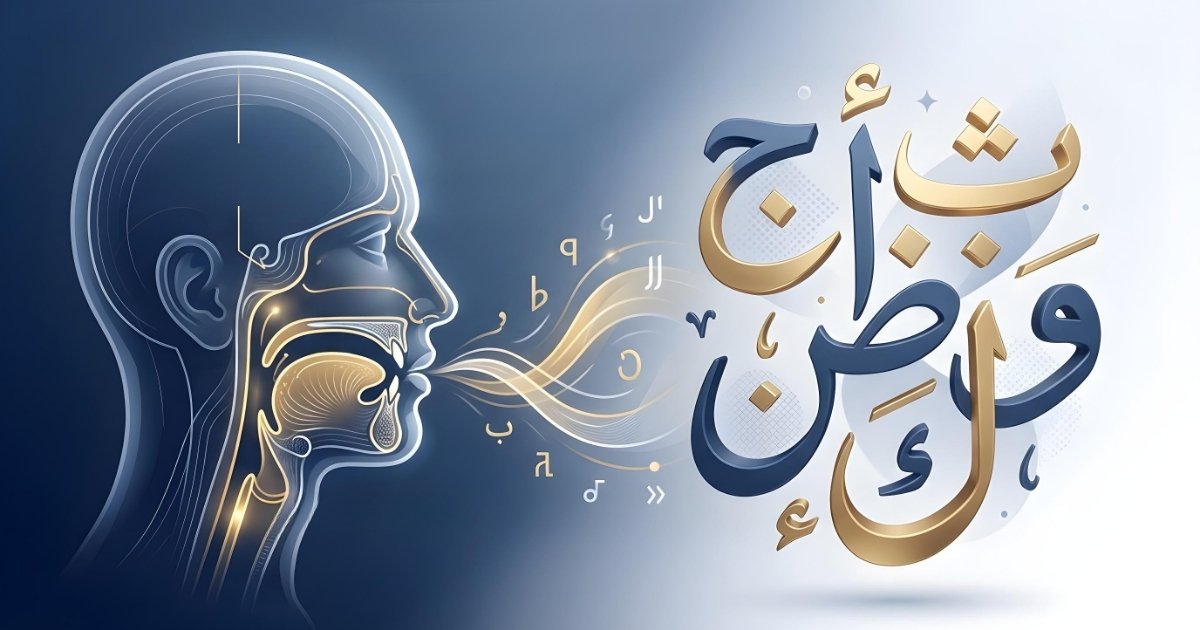
I tested many methods while teaching beginners the Arabic alphabet. Learners understood the sounds faster when the letters were shown in a simple visual table. A clear chart that displays each letter with its basic pronunciation creates instant recognition and builds confidence.
Arabic includes sounds that come from the throat, the tongue, and the lips. Seeing the letters arranged in one view helps you notice patterns and makes the next steps easier. Use the table below as your quick reference before starting detailed pronunciation practice.
Click a letter to hear the Arabic pronunciation.
Understanding the Arabic Alphabet Structure
The Arabic alphabet contains 28 letters, and every single one is a consonant. English mixes consonants and vowels freely—B, A, T spells “bat.” Arabic works differently.
Arabic uses an abjad script. This means the written letters represent consonants, while vowels appear as small marks above or below the letters. These marks are called Harakat, and native speakers often omit them in everyday writing.
The script flows from right to left in a connected, cursive style. Each letter changes shape depending on where it sits in a word:
- Isolated form: When the letter stands alone
- Initial form: At the beginning of a word
- Medial form: In the middle of a word
- Final form: At the end of a word
Learning four versions of each letter feels overwhelming at first. I practiced by writing words repeatedly, letting muscle memory build naturally over two weeks. The brain adapts faster than you expect.
Arabic Alphabet Pronunciation (Organized by Groups)
1. Throat Letters (ع غ ح خ ه ء)
| Letter | Name | How It Sounds | Makhraj | Practice Technique |
|---|---|---|---|---|
| ع | Ayn | Tight deep “a” | Middle throat | Gently squeeze throat while saying “ah” |
| غ | Ghayn | Deep French “r” with vibration | Middle throat | Say “gr” slowly with throat vibration |
| ح | Haa | Soft airy “h” | Lower throat | Blow warm air as if fogging a mirror |
| خ | Khaa | Harsh “kh” like “loch” | Upper throat | Light gargling sound |
| ه | Ha | Soft breathy “h” | Top of throat | Whisper “haaa” with steady airflow |
| ء | Hamza | Glottal stop | Vocal cords | Say “uh-oh,” pause between parts |
2. Emphatic Letters (ص ض ط ظ ق)
| Letter | Name | How It Sounds | Makhraj | Practice Technique |
|---|---|---|---|---|
| ص | Saad | Heavy “s” | Side of tongue raised | Compare س and ص back-to-back |
| ض | Daad | Heavy “d,” tongue touches molars | Side of tongue | Touch molars lightly with tongue |
| ط | Taa | Heavy “t,” stronger pressure | Back of tongue lifted | Press tongue upward strongly |
| ظ | Dhaa | Heavy “th” | Tongue against teeth + heaviness | Say “th” while lifting back of tongue |
| ق | Qaaf | Deep “k” | Very back of tongue | Push tongue back sharply |
3. Tongue Letters (س ش ل ر ت د ث ذ ج ز ن)
| Letter | Name | How It Sounds | Makhraj | Practice Technique |
|---|---|---|---|---|
| س | Seen | Clear “s” | Tip of tongue | Smile slightly to keep sound thin |
| ش | Sheen | “Sh” | Middle of tongue raised | Say “shhh” like quieting someone |
| ل | Laam | “L” | Tip of tongue touching gums | Practice tapping upper gums |
| ر | Raa | Light trill | Tip of tongue | Quick tongue taps |
| ت | Taa | Light “t” | Tip of tongue | Whisper “t” gently |
| د | Daal | Light “d” | Tip of tongue | Press lightly behind top teeth |
| ث | Thaa | “Th” as in “think” | Tongue between teeth | Light tongue stretch forward |
| ذ | Dhaal | “Th” as in “this” | Tongue touching teeth | Add voicing while tongue touches teeth |
| ج | Jeem | “J” as in “judge” | Middle of tongue | Say “juh” slowly |
| ز | Zaa | “Z” | Tip of tongue | Say “zzz” with steady vibration |
| ن | Noon | “N” with nasal vibration | Nasal cavity | Hum while touching your nose |
4. Lip Letters (ب ف م و)
| Letter | Name | How It Sounds | Makhraj | Practice Technique |
|---|---|---|---|---|
| ب | Baa | “B” | Both lips | Pop lips gently |
| ف | Faa | “F” | Lower lip + upper teeth | Bite lip lightly |
| م | Meem | “M” with nasal sound | Both lips + nasal cavity | Hum with lips closed |
| و | Waw | “W” or long “oo” | Lips rounded | Make a small circle with lips |
5. Long Vowel Letters (ا و ي)
| Letter | Name | Long Vowel Sound | Makhraj | Practice Technique |
|---|---|---|---|---|
| ا | Alif | Long “aa” | Oral cavity | Keep mouth wide open |
| و | Waw (vowel) | Long “oo” | Rounded lips | Hold lips in a soft “O” |
| ي | Yaa (vowel) | Long “ee” | Middle of tongue | Smile while saying “ee” |
The Two-Tier Vowel System in Arabic
Arabic vowels split into two categories: short and long.
1. Short vowels (Harakat)
mark the consonants with tiny symbols:
- Fathah (َ) – sounds like the ‘a’ in “cat”
- Kasrah (ِ) – sounds like the ‘i’ in “sit”
- Dammah (ُ) – sounds like the ‘u’ in “put”
These marks do double duty. They indicate pronunciation and grammatical case endings. When reading modern Arabic texts newspapers, novels, social media—these marks vanish. Readers deduce pronunciation from context and word structure.
2. Long vowels (Huruf al-Madd)
use actual letters:
- Alif (ا) creates the long “aa” sound
- Waw (و) creates the long “oo” sound
- Yaa (ي) creates the long “ee” sound
I spent my first month confused about why some letters acted as consonants and sometimes as vowels. The rule is simple: when these letters follow their corresponding short vowel (Fathah before Alif, Dammah before Waw, Kasrah before Yaa), they extend into long vowels.
The Glottal Stop That Changes Everything
The Hamza (ء) represents a glottal stop a complete, momentary closure of your vocal cords. English speakers use this sound without realizing it. Say “uh-oh” out loud. That tiny pause between syllables? That’s a glottal stop.
In Arabic, the Hamza carries phonemic weight. Changing or omitting it completely alters word meaning.
The Two Pillars of Arabic Pronunciation
Arabic pronunciation science rests on two foundations: Makharij and Sifaat. Understanding these concepts transformed my pronunciation from guesswork into systematic skill-building.
Pillar 1: Makharij Al-Huruf (17 Articulation Points)
Makharij literally means “exit points.” Each Arabic sound originates from a specific location in your vocal tract—your lips, tongue, throat, or nasal cavity.
There are 17 distinct articulation points organized into five major zones:
1. The Oral Cavity (Al-Jawf)
This open space extending from your chest through your throat produces the three long vowels. The sound resonates freely without touching any specific point in your mouth. When I first learned this, I placed my hand on my chest while saying “aaaaa” and felt the vibration travel up through my throat. This cavity requires steady breath control and relaxed vocal cords.
2. The Throat (Al-Halq)
Six letters originate from three distinct throat regions:
- Deepest throat: Hamza (ء) and Haa (ه)
- Middle throat: Ayn (ع) and Haa (ح)
- Upper throat: Ghayn (غ) and Khaa (خ)
The Ayn (ع) nearly broke me. This sound requires constricting your middle throat in a way English never demands. I practiced by saying “ah” normally, then gradually tightening my throat muscles mid-sound. After two weeks of five-minute daily drills, my throat muscles finally understood what to do.
3. The Tongue (Al-Lisan)
The tongue produces more sounds than any other articulation zone. Different tongue positions—tip, middle, back, sides—create distinct sounds when touching various points on the roof of your mouth.
4. The Lips (Ash-Shafataan)
Letters like Baa (ب), Meem (م), and Faa (ف) form by bringing your lips together or touching your lower lip to your upper teeth.
5. The Nasal Cavity (Al-Khaishum)
This zone adds nasal resonance to specific sounds during assimilation, particularly with Noon (ن) and Meem (م) when followed by certain letters.
Pillar 2: Sifaat Al-Huruf (Letter Characteristics)
Knowing where a sound originates isn’t enough. You must also understand how it’s produced—the quality, texture, and intensity of the sound.
Think of it this way: Makhraj is the factory location. Sifaat is the product quality coming out of that factory.
The Critical Heavy vs. Light Distinction
Arabic letters split into two fundamental categories:
Heavy letters (Tafkheem) require:
- Elevating the back of your tongue toward your soft palate
- Rounding your lips
- Creating a thick, resonant sound quality
The four heaviest letters—Saad (ص), Daad (ض), Taa’ (ט), Dhaa’ (ظ)—possess both elevation (Isti’la) and adhesion (Itbaq). Your tongue literally presses against your palate, enclosing the sound.
Light letters (Tarqiq) require:
- Depressing your tongue
- Maintaining a slight smile
- Creating a thin, bright sound quality
I practiced the heavy-light distinction using mirrors. When saying Baa (ب), I smiled slightly and watched my lips stay relaxed. When saying Saad (ص), I deliberately rounded my lips and felt my tongue elevate. After three weeks, my mouth automatically adjusted without conscious thought.
This distinction matters profoundly. The letters Taa (ت) and Taa’ (ط) originate from the same physical location in your mouth. Only their Sifaat—light versus heavy—differentiates them. Confusing these changes word meaning entirely.
Other Critical Characteristics
- Jahr (voicing): Vocal cords vibrate (e.g., Baa ب)
- Hams (voicelessness): Vocal cords stay relaxed (e.g., Faa ف)
- Inhiraaf (inclination): The sound deviates slightly from its standard point, as with Laam (ل) and Raa (ر)
The Most Challenging Arabic Alphabet Sounds for English Speakers
Some Arabic sounds simply don’t exist in English. No approximation helps. Your mouth must learn entirely new motor patterns.
Arabic Alphabet Guttural Sounds
Four throat letters torture English speakers:
1. Ayn (ع)
This sound originates from your middle throat. Place your hand on your throat and say “ah.” Now say “ah” again while tightening your throat muscles as if beginning a yawn. That constriction creates the Ayn sound.
2. Ghayn (غ)
This resembles the French “r” but originates deeper in your throat. The best practice method I found: gargle water for 30 seconds, then try making that same throat position without water while saying “gh.” The muscle memory transfers directly.
3. Haa (ح)
This heavily aspirated ‘h’ requires much more force than English ‘h’. Hold your hand six inches from your mouth and say the English word “hat.” You’ll feel minimal air. Now say Haa (ح) with enough force that you feel a strong burst of air hit your palm.
4. Khaa (خ)
Similar to the Scottish word “loch” but produced deeper in your throat with more raspy quality. Start with the Scottish sound, then gradually move the articulation point backward until it originates from your soft palate area.
Arabic Emphatic Consonants
Four emphatic consonants require simultaneous tongue elevation and lip rounding:
1. Taa’ (ط)
Say the English ‘t’ sound. Your tongue tip touches the ridge behind your upper teeth. Now say ‘t’ again while deliberately elevating the back of your tongue toward your soft palate and rounding your lips. The sound becomes heavier, fuller, more resonant.
2. Saad (ص)
The emphatic counterpart to Seen (س). Round your lips into an ‘O’ shape and elevate your tongue. The ‘s’ sound transforms from bright and sharp to dark and thick. Words like “صحيح” (correct) require maintaining this heaviness throughout the entire word.
3. Daad (ض)
Arabic is sometimes called “the language of Daad” because this letter’s sound exists nowhere else. It’s a heavy ‘d’ with tongue elevation, but the articulation point shifts slightly from a standard ‘d’. Native speakers debate the precise articulation method even today.
4. Dhaa’ (ظ)
The heavy counterpart to Dhaal (ذ). Stick your tongue tip between your teeth as if saying “this,” then elevate the back of your tongue and round your lips. The ‘th’ sound gains depth and resonance.
Conclusion: The 90-Day Transformation
Three months ago, Arabic pronunciation felt impossible. My throat couldn’t produce sounds English never required. My tongue wouldn’t cooperate with emphatic consonants. Native speakers asked me to repeat myself constantly.
The transformation didn’t require exceptional talent. It required:
- 15 minutes daily (no exceptions)
- Spaced repetition (reviewing at Days 3, 7, 14, 30)
- Multiple methods (apps, shadowing, role-play, language exchange)
- Measurable tracking (accuracy scores, recordings, comprehension ratings)
- Patience with the process (accepting plateaus as normal)
The research is conclusive: Daily micro-practice produces 40% better retention than weekly marathon sessions. Spaced repetition achieves 85% retention rates. Computer-assisted feedback accelerates learning. Online language exchange outperforms classroom instruction alone.
You have the same tools available that I used. The only question: will you practice 15 minutes today?
Start now. Record yourself attempting the first five letters. Download AlifBee. Find an Arabic alphabet song on YouTube. Create your tracking spreadsheet.
Ninety days from now, you’ll listen to today’s recording and barely recognize your own voice. The transformation is that dramatic.
Your Arabic pronunciation journey starts with today’s 15 minutes.