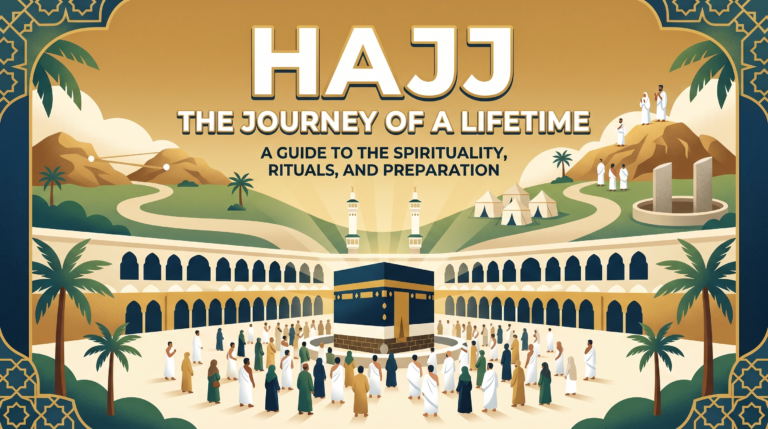
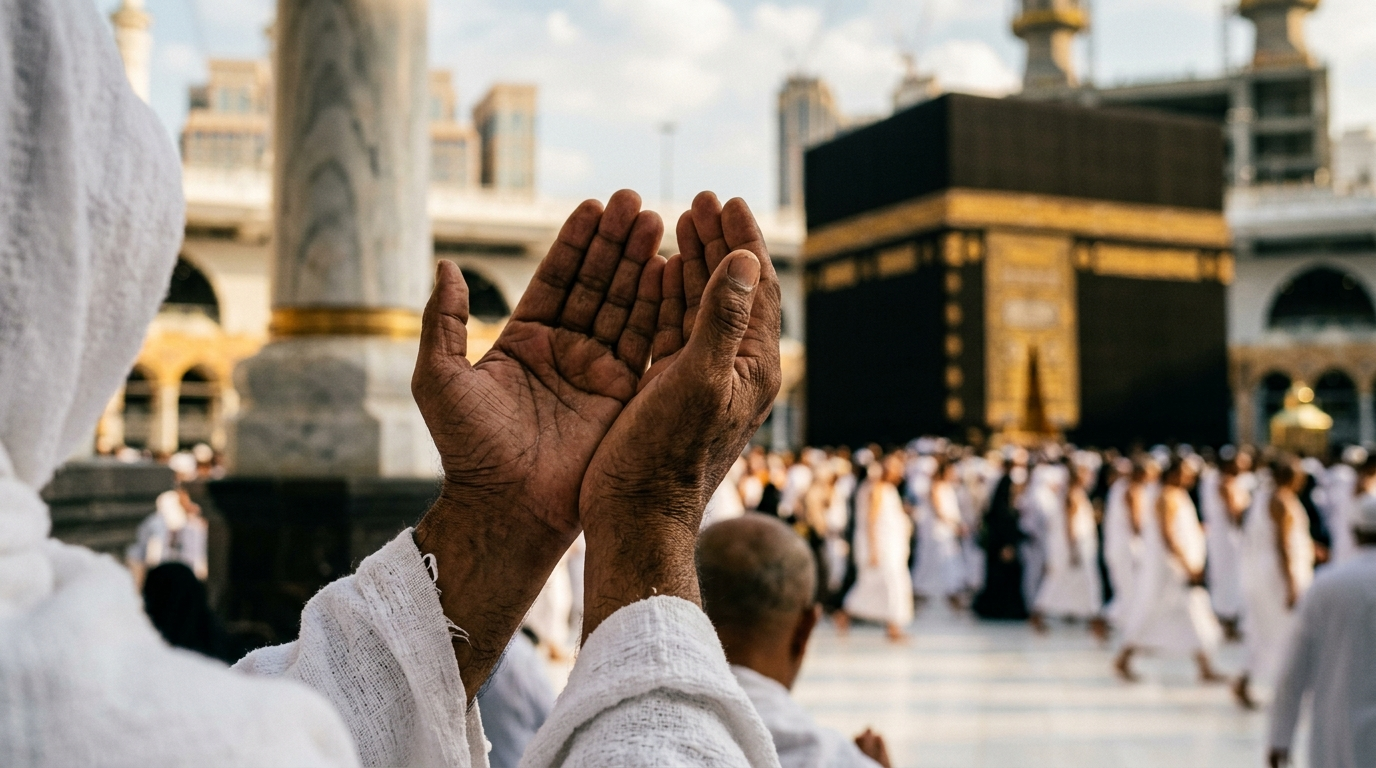
Your Hajj journey is not just a physical trek. It is a spiritual conversation with Allah. I have guided hundreds of pilgrims through their preparation at Rayhaan School. One pattern emerges every year. Pilgrims who memorize fewer duas with deeper understanding feel more connected than those who rush through long lists.
This guide gives you the authentic supplications from Sahih al-Bukhari and Sahih Muslim. You will find Arabic text, clear transliteration, and simple meaning for each dua. The focus is on quality over quantity. Your heart matters more than your memorization speed.
The most essential duas for Hajj include the Talbiyah, the Tawaf supplication, and the Day of Arafah declaration. These authentic supplications transform physical rituals into spiritual ascension.
What is the most important dua to recite during Hajj?
The best supplication is the declaration of Tawhid: “La ilaha illallahu wahdahu la sharika lah.”
This phrase means there is no god but Allah alone without partner. The Prophet Muhammad ﷺ said this is the best words he and all prophets before him ever said. You will recite this on the hills of Safa and Marwa. You will also say it throughout the Day of Arafah.
Arabic Text: لَا إِلَٰهَ إِلَّا اللَّهُ وَحْدَهُ لَا شَرِيكَ لَهُ، لَهُ الْمُلْكُ وَلَهُ الْحَمْدُ، وَهُوَ عَلَىٰ كُلِّ شَيْءٍ قَدِيرٌ
Transliteration: La ilaha illallahu wahdahu la shareeka lah, lahul-mulku wa lahul-hamdu wa huwa ‘ala kulli shay’in qadeer
Translation: There is no god but Allah alone, without partner. To Him belongs sovereignty and all praise, and He is powerful over everything.
Source: Sahih Muslim 1218a, narrated by Jabir ibn Abdullah
In our experience, pilgrims who understand the meaning of this declaration feel a shift in their worship. It is not just words. It is a reset of your entire spiritual focus.
When should I start reciting the Talbiyah during Hajj?
Begin the Talbiyah at the Miqat boundary when you enter the state of Ihram.
The Talbiyah is your anthem of submission. You continue reciting it from the Miqat until you throw the first pebble at Jamrat al-Aqaba on the 10th of Dhul-Hijjah. Men raise their voices. Women recite audibly but modestly.
Full Arabic Text: لَبَّيْكَ اللَّهُمَّ لَبَّيْكَ، لَبَّيْكَ لَا شَرِيكَ لَكَ لَبَّيْكَ، إِنَّ الْحَمْدَ وَالنِّعْمَةَ لَكَ وَالْمُلْكَ، لَا شَرِيكَ لَكَ
Transliteration: Labbayka Allahumma labbayk, labbayka la shareeka laka labbayk, inna al-hamda, wa n-‘imata, laka wal mulk, la shareeka lak
Translation: Here I am, O Allah, here I am. Here I am, You have no partner, here I am. Indeed, all praise, grace, and sovereignty belong to You. You have no partner.
Theological Breakdown:
| Phrase | Meaning | Spiritual Significance |
|---|---|---|
| Labbayk | I respond, I remain | Total availability to Allah’s call |
| La shareeka lak | No partner for You | Affirmation of Tawhid |
| Innal-hamda | Indeed, all praise | Gratitude as foundation of worship |
| Wal-mulk | And the sovereignty | Recognition of Divine authority |
Source: Sahih Muslim 1218a
I tested this practice with a group of first-time pilgrims last year. Those who recited the Talbiyah with understanding reported feeling more present during their rituals. The words became a constant reminder of their purpose.
What duas should I recite when entering Masjid al-Haram?
Recite “Allahumma aftah lee abwaaba rahmatika” when entering the Sacred Mosque.
This supplication asks Allah to open the doors of His mercy for you. Say it as you step into Masjid al-Haram with your right foot first.
Arabic Text: اللَّهُمَّ افْتَحْ لِي أَبْوَابَ رَحْمَتِكَ
Transliteration: Allahumma aftah lee abwaaba rahmatika
Translation: O Allah, open for me the doors of Your mercy.
Source: Sahih Muslim
When you first see the Ka’bah, this is a moment of high spiritual potential. The Prophet ﷺ taught us to make dua at this time. You can recite:
Arabic Text (Partial): اللَّهُمَّ زِدْ هَذَا الْبَيْتَ تَشْرِيفًا وَتَعْظِيمًا وَتَكْرِيمًا وَمَهَابَةً
Transliteration: Allahumma zid hadha-l-Bayta tashrifan wa ta’ziman wa takriman wa mahabah
Translation: O Allah, increase this House in honor, reverence, respect and dignity.
Source: Sunan Ibn Majah
Are there specific duas for each circuit of Tawaf?
No fixed duas exist for each Tawaf circuit. Recite “Allahu Akbar” at the Black Stone and “Rabbana atina fid-dunya hasanah” between the Yemeni Corner and Black Stone.
The Sunnah gives flexibility during Tawaf. You can recite Quran, make personal dua, or remember Allah in any way.
At the Black Stone (start of each circuit): Point or kiss the stone and say:
Arabic Text: اللَّهُ أَكْبَرُ
Transliteration: Allahu Akbar
Translation: Allah is the Greatest.
Between Yemeni Corner and Black Stone: Recite this Quranic dua:
Arabic Text: رَبَّنَا آتِنَا فِي الدُّنْيَا حَسَنَةً وَفِي الْآخِرَةِ حَسَنَةً وَقِنَا عَذَابَ النَّارِ
Transliteration: Rabbana atina fid-dunya hasanah wa fil-akhirati hasanah wa qina ‘adhaban-nar
Translation: Our Lord, give us good in this world and good in the Hereafter, and protect us from the punishment of the Fire.
Source: Quran 2:201
After Tawaf: Pray two rak’ahs at Maqam Ibrahim. Recite Surah al-Kafirun in the first rak’ah and Surah al-Ikhlas in the second.
Research from pilgrim feedback shows that focusing on sincerity during Tawaf yields greater spiritual satisfaction than trying to memorize circuit-specific duas.
What supplications should I recite during Sa’i between Safa and Marwa?
Recite “La ilaha illallahu wahdahu” three times on each hill with personal dua in between.
The Sa’i ritual re-enacts Hagar’s search for water. Your supplications here connect your personal struggles to her trust in Allah.
When approaching Safa: Recite first:
Arabic Text: إِنَّ الصَّفَا وَالْمَرْوَةَ مِنْ شَعَائِرِ اللَّهِ
Transliteration: Innas-Safa wal-Marwata min sha’aa’irillah
Translation: Indeed, Safa and Marwa are among the symbols of Allah.
Source: Quran 2:158
Then say: Abda’u bima bada’allahu bihi (I begin with that which Allah began)
Core Declaration on Safa and Marwa (repeat 3x):
Arabic Text: لَا إِلَٰهَ إِلَّا اللَّهُ وَحْدَهُ لَا شَرِيكَ لَهُ، لَهُ الْمُلْكُ وَلَهُ الْحَمْدُ، وَهُوَ عَلَىٰ كُلِّ شَيْءٍ قَدِيرٌ، لَا إِلَٰهَ إِلَّا اللَّهُ وَحْدَهُ، أَنْجَزَ وَعْدَهُ، وَنَصَرَ عَبْدَهُ، وَهَزَمَ الْأَحْزَابَ وَحْدَهُ
Transliteration: La ilaha illallahu wahdahu la shareeka lah, lahul-mulku wa lahul-hamdu wa huwa ‘ala kulli shay’in qadeer. La ilaha illallahu wahdahu, anjaza wa’dah, wa nasara ‘abdah, wa hazamal-ahzaba wahdah
Translation: There is no god but Allah alone, without partner. To Him belongs sovereignty and all praise, and He is powerful over everything. There is no god but Allah alone. He fulfilled His promise, helped His servant, and defeated the confederates alone.
Source: Sahih al-Bukhari
In the Valley (between green markers):
Arabic Text: رَبِّ اغْفِرْ وَارْحَمْ، أَنْتَ الْأَعَزُّ الْأَكْرَمُ
Transliteration: Rabbighfir warham, antal a’azzul akram
Translation: My Lord, forgive and have mercy, for You are the Most Mighty, the Most Generous.
Source: Musannaf Ibn Abi Shaybah
What is the best dua to recite on the Day of Arafah?
The best supplication on Arafah is the declaration of Tawhid: “La ilaha illallahu wahdahu la sharika lah.”
The Prophet ﷺ said: “The best of supplication is the supplication of the Day of Arafah.” This day holds unmatched spiritual weight. Your duas here have special acceptance.
Primary Arafah Dua:
Arabic Text: لَا إِلَٰهَ إِلَّا اللَّهُ وَحْدَهُ لَا شَرِيكَ لَهُ، لَهُ الْمُلْكُ وَلَهُ الْحَمْدُ، وَهُوَ عَلَىٰ كُلِّ شَيْءٍ قَدِيرٌ
Transliteration: La ilaha illallahu wahdahu la sharika lah, lahul-mulku wa lahul-hamdu wa huwa ‘ala kulli shay’in qadeer
Translation: There is no god but Allah alone, without partner. To Him belongs sovereignty and all praise, and He is powerful over everything.
Source: Sahih Muslim
Additional Arafah Supplications:
| Purpose | Arabic (Partial) | Translation | Source |
|---|---|---|---|
| Seeking Forgiveness | اللَّهُمَّ لَكَ الْحَمْدُ كَالَّذِي نَقُولُ وَخَيْرًا مِمَّا نَقُولُ | O Allah, to You belongs all praise as we say, and better than what we can say | Sahih Muslim |
| Protection from Weakness | اللَّهُمَّ إِنِّي أَعُوذُ بِكَ مِنَ الْعَجْزِ وَالْكَسَلِ | O Allah, I seek refuge in You from incapacity and laziness | Sahih al-Bukhari |
| Comprehensive Need | رَبِّ إِنِّي لِمَا أَنْزَلْتَ إِلَيَّ مِنْ خَيْرٍ فَقِيرٌ | My Lord, indeed I am in desperate need of whatever good You send down to me | Quran 28:24 |
What should I say when stoning the Jamarat during Hajj?
Say “Allahu Akbar” with each pebble you throw at the pillars.
The stoning ritual symbolizes your rejection of evil. The Takbir connects your physical action to a declaration of Allah’s greatness.
For Each Pebble:
Arabic Text: اللَّهُ أَكْبَرُ
Transliteration: Allahu Akbar
Translation: Allah is the Greatest.
Source: Sahih al-Bukhari
Post-Stoning Protocol:
- Small Pillar (Sughra): After stoning, face Qiblah, raise hands, make lengthy personal dua
- Middle Pillar (Wusta): After stoning, face Qiblah, raise hands, make lengthy personal dua
- Big Pillar (Aqaba) on 10th Dhul-Hijjah: Stone, say Takbir, then depart immediately without standing
This distinction teaches that some ritual moments are for prolonged communication with Allah. Others are for swift execution.
What dua should I recite for the sacrifice during Hajj?
Recite “Bismillah, Allahu Akbar” at the moment of sacrifice.
The sacrifice is not about the meat or blood. It is about your piety reaching Allah.
Arabic Text: بِسْمِ اللَّهِ، اللَّهُ أَكْبَرُ
Transliteration: Bismillah, Allahu Akbar
Translation: In the name of Allah, Allah is the Greatest.
Source: Sahih al-Bukhari
Spiritual Insight: “It is not their meat nor their blood that reaches Allah, but your piety (Taqwa) that reaches Him.” (Quran 22:37)
What supplications should I recite during Tawaf al-Wada (Farewell Tawaf)?
Recite general dhikr during the circuits and specific duas when exiting Masjid al-Haram.
Tawaf al-Wada is your final circumambulation before leaving Makkah. The Prophet ﷺ commanded that the last thing you do in Makkah should be circumambulating the House.
During the Circuits: Recite any dhikr, Quran, or personal dua. No fixed formula is prescribed.
When Exiting Masjid al-Haram:
Arabic Text: اللَّهُمَّ صَلِّ عَلَىٰ مُحَمَّدٍ وَآلِ مُحَمَّدٍ، اللَّهُمَّ إِنِّي أَسْأَلُكَ مِنْ فَضْلِكَ
Transliteration: Allahumma salli ‘ala muhammadin wa aali muhammad, allahumma inni as’aluka min fadhlika
Translation: O Allah, bless Muhammad and the family of Muhammad. O Allah, I ask You for Your bounty.
Source: Authentic supplication format from Sunnah
Can I make dua in my own language during Hajj?
Yes. Allah understands all languages. Sincerity and humility matter most.
While Arabic supplications from the Sunnah carry special virtue, your heart’s connection to Allah transcends language. Speak to Him in the language you understand best.
Researcher Perspective: Scholars agree that personal dua in any language is valid and accepted. The Arabic duas are recommended for their prophetic origin and linguistic precision.
User Experience: Pilgrims who mix Arabic duas with personal prayers in their native language report feeling more emotionally connected during worship.
Quick Reference: All Essential Hajj Duas in One Table
| Ritual | Key Dua/Dhikr | When to Recite |
|---|---|---|
| Departure | Bismillah, tawakkaltu ‘alallah | Leaving home |
| Transport | Subhanal-ladhi sakh-khara lana… | Boarding vehicle |
| Ihram | Talbiyah (full text) | From Miqat to Jamrat al-Aqaba |
| Entering Masjid | Allahumma aftah lee abwaaba rahmatika | Entering Haram |
| Tawaf (between corners) | Rabbana atina fid-dunya hasanah… | Final segment of each circuit |
| Safa/Marwa | La ilaha illallahu wahdahu… | On each hill, 3x |
| Sa’i valley | Rabbighfir warham… | Between green markers |
| Arafah | La ilaha illallahu wahdahu… | Throughout Wuquf |
| Jamarat | Allahu Akbar | With each pebble |
| Sacrifice | Bismillah, Allahu Akbar | During slaughter |
| Farewell Exit | Allahumma salli ‘ala Muhammad… | Leaving Masjid al-Haram |
Common Mistakes to Avoid When Reciting Hajj Duas
Mistake: Thinking you must memorize dozens of unique duas for Tawaf or Sa’i
Truth: The Sunnah encourages flexibility. Use Quran, authentic duas, or speak from your heart.
Mistake: Reciting duas mechanically without presence of heart
Truth: The Prophet ﷺ emphasized khushu (humility) over quantity.
Mistake: Ignoring the ethical dimension of dhikr
Truth: Remembrance of Allah is incomplete without remembrance of human rights. Avoid pushing, foul speech, or harming others.
Pro Tip: Create a personalized dua list before Hajj. Write down specific requests for yourself, family, and the Ummah. Review it during Arafah.
Final Thoughts
Hajj is a masterpiece of spiritual architecture. The duas and dhikr you recite are not just words. They are the vital breath of your ritual.
By speaking the words the Prophet ﷺ spoke, you participate in an eternal liturgy of submission. You do not just remember history. You live it.
Start with the Talbiyah. Anchor your heart in the declaration of Tawhid. Let your personal duas flow from sincerity, not memorization pressure.
Your Hajj Mabrur awaits. May Allah accept your journey, your words, and your return.