
Juz Amma is where almost every hifz journey begins, and for good reason. It is not just the most accessible section of the Quran. It is the most used, the most recited, and the most spiritually present in a Muslim’s daily life.
This guide gives you the complete Juz Amma surahs list in order, along with everything you need to understand it, memorize it, and appreciate its significance.
What Is Juz Amma?
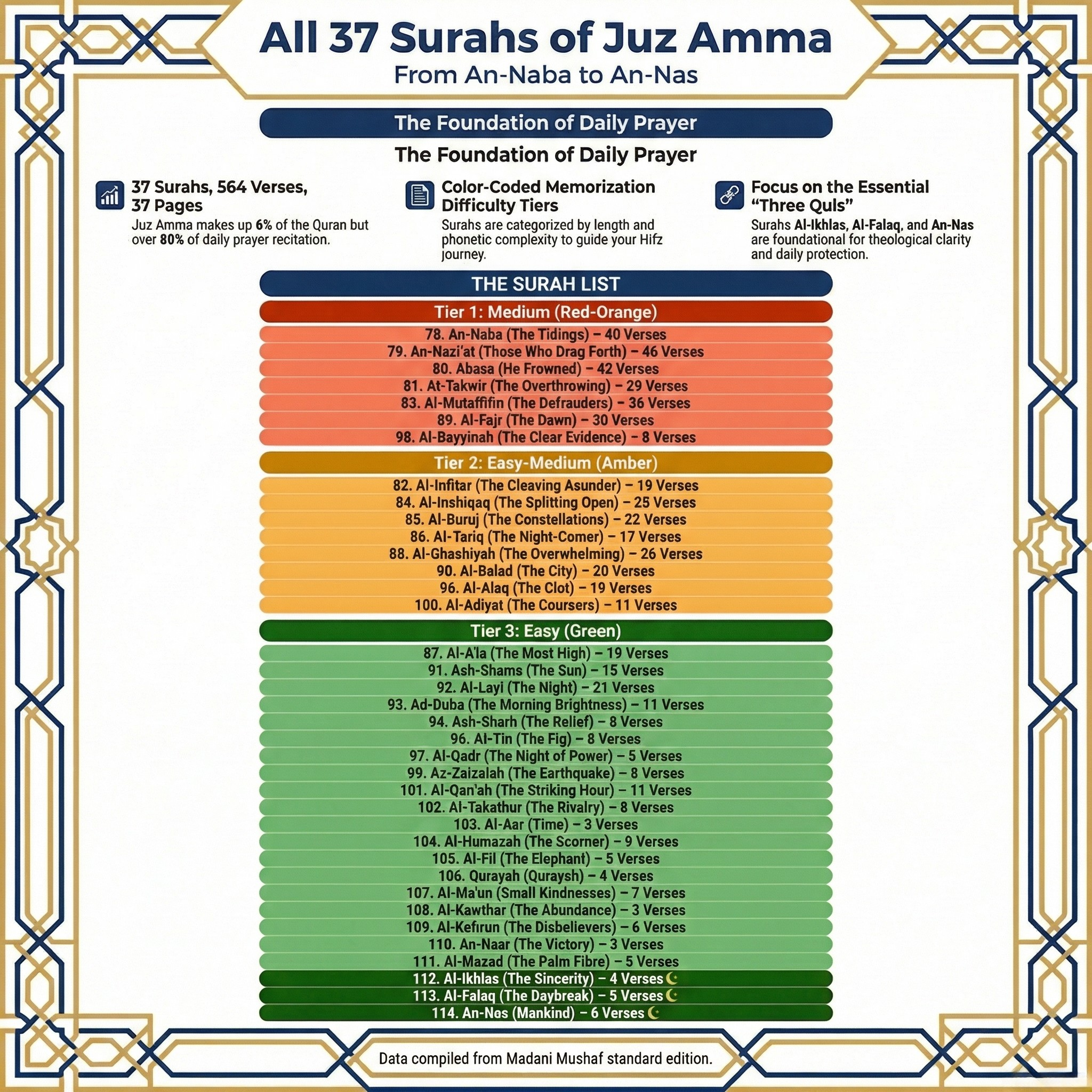
Juz Amma is the 30th section of the Quran. It contains 37 surahs, 564 verses, and spans roughly 37 pages in the standard Madani Mushaf.
The Quran is divided into 30 equal sections called ajza (plural of juz). Juz Amma is the final one. It takes its name from the opening words of its first surah, An-Naba: “عَمَّ يَتَسَاءَلُونَ” — “Amma yatasā’alūn” — meaning “About what are they asking one another?”
Here are the key facts at a glance:
| Feature | Detail |
| Position in the Quran | 30th Juz (final section) |
| Total Surahs | 37 |
| Total Verses (Ayat) | 564 |
| Pages in Madani Mushaf | ~37 pages |
| Revelation Period | Predominantly Early Meccan |
| Longest Surah | An-Nazi’at (46 verses) |
| Shortest Surahs | Al-Asr, Al-Kawthar, An-Nasr (3 verses each) |
| Share of Total Quran Text | ~6.12% |
| Share of Daily Prayer Recitation | Over 80% |
That last comparison deserves emphasis. Juz Amma is 6.12% of the Quran. Yet it makes up more than 80% of what Muslims recite in daily congregational prayers. No other section of the Quran delivers that kind of return on memorization effort.
What Are All the Surahs in Juz Amma, In Order?
Juz Amma runs from Surah 78 (An-Naba) to Surah 114 (An-Nas), covering 37 chapters in total.
The difficulty rating below is a pedagogical assessment based on verse length, phonetic complexity, and the presence of Mutashabihat (similar-sounding verses that are easy to confuse). It is intended for non-native Arabic speakers following a standard hifz program.
| # | Surah No. | Arabic Name | English Meaning | Verses | Difficulty |
| 1 | 78 | An-Naba | The Tidings | 40 | Medium |
| 2 | 79 | An-Nazi’at | Those Who Drag Forth | 46 | Medium |
| 3 | 80 | Abasa | He Frowned | 42 | Medium |
| 4 | 81 | At-Takwir | The Overthrowing | 29 | Medium |
| 5 | 82 | Al-Infitar | The Cleaving Asunder | 19 | Easy-Medium |
| 6 | 83 | Al-Mutaffifin | The Defrauders | 36 | Medium |
| 7 | 84 | Al-Inshiqaq | The Splitting Open | 25 | Easy-Medium |
| 8 | 85 | Al-Buruj | The Constellations | 22 | Easy-Medium |
| 9 | 86 | At-Tariq | The Night-Comer | 17 | Easy-Medium |
| 10 | 87 | Al-A’la | The Most High | 19 | Easy |
| 11 | 88 | Al-Ghashiyah | The Overwhelming | 26 | Easy-Medium |
| 12 | 89 | Al-Fajr | The Dawn | 30 | Medium |
| 13 | 90 | Al-Balad | The City | 20 | Easy-Medium |
| 14 | 91 | Ash-Shams | The Sun | 15 | Easy |
| 15 | 92 | Al-Layl | The Night | 21 | Easy |
| 16 | 93 | Ad-Duha | The Morning Brightness | 11 | Easy |
| 17 | 94 | Ash-Sharh | The Relief | 8 | Easy |
| 18 | 95 | At-Tin | The Fig | 8 | Easy |
| 19 | 96 | Al-Alaq | The Clot (Read!) | 19 | Easy-Medium |
| 20 | 97 | Al-Qadr | The Night of Power | 5 | Easy |
| 21 | 98 | Al-Bayyinah | The Clear Evidence | 8 | Medium |
| 22 | 99 | Az-Zalzalah | The Earthquake | 8 | Easy |
| 23 | 100 | Al-Adiyat | The Coursers | 11 | Easy-Medium |
| 24 | 101 | Al-Qari’ah | The Striking Hour | 11 | Easy |
| 25 | 102 | At-Takathur | The Rivalry | 8 | Easy |
| 26 | 103 | Al-Asr | Time | 3 | Easy |
| 27 | 104 | Al-Humazah | The Scorner | 9 | Easy |
| 28 | 105 | Al-Fil | The Elephant | 5 | Easy |
| 29 | 106 | Quraysh | Quraysh | 4 | Easy |
| 30 | 107 | Al-Ma’un | Small Kindnesses | 7 | Easy |
| 31 | 108 | Al-Kawthar | The Abundance | 3 | Easy |
| 32 | 109 | Al-Kafirun | The Disbelievers | 6 | Easy |
| 33 | 110 | An-Nasr | The Victory | 3 | Easy |
| 34 | 111 | Al-Masad | The Palm Fibre | 5 | Easy |
| 35 | 112 | Al-Ikhlas | The Sincerity | 4 | Easy |
| 36 | 113 | Al-Falaq | The Daybreak | 5 | Easy |
| 37 | 114 | An-Nas | Mankind | 6 | Easy |
Note for memorizers: The “Medium” surahs at the beginning of Juz Amma (78 to 89) contain more verses with similar rhythmic patterns. Students using the Ottoman back-to-front method start with the easy surahs at the end, building confidence before tackling the longer opening chapters.
What Does “Juz Amma” Mean in Arabic?
“Juz Amma” means “the part that begins with Amma.” The word “Amma” is the Arabic opening of Surah An-Naba, meaning “About what.”
The full opening verse of Surah An-Naba reads:
عَمَّ يَتَسَاءَلُونَ “Amma yatasā’alūn” “About what are they asking one another?” (Quran 78:1)
The naming convention is simple. Every juz in the Quran is often identified by its opening word. Juz Amma is the one that opens with “Amma.” This naming helped scholars and students identify sections before printed page numbers became standard.
The Prophet Muhammad (peace be upon him) emphasized the virtue of memorizing the Quran and reciting it daily. He said:
«اقْرَؤُوا الْقُرْآنَ فَإِنَّهُ يَأْتِي يَوْمَ الْقِيَامَةِ شَفِيعًا لِأَصْحَابِهِ» “Iqra’ul Qur’ana fa innahu ya’ti yawmal qiyamati shafi’an li-ashabihi” “Read the Quran, for it will come on the Day of Resurrection as an intercessor for those who recite it.” (Sahih Muslim, 804)
Juz Amma is the entry point into that daily recitation habit. It is the foundation of a Muslim’s lifelong relationship with the Quran.
Why Do All Hifz Teachers Start with Juz Amma?
Juz Amma is the standard starting point because its surahs are short, rhythmic, and recited in every daily prayer — giving students constant built-in revision.
Three data-backed reasons explain this universal consensus among hifz educators.
Reason 1: Structural Accessibility Juz Amma is the only section of the Quran where 23 out of 37 surahs contain fewer than 11 verses. Short surahs are achievable in a single session. A student who memorizes Al-Kawthar (3 verses) in 20 minutes finishes a complete chapter of the Quran on their very first day. That psychological win is not trivial. It creates a neurological reward loop that sustains long-term effort.
Reason 2: Phonetic Architecture The surahs of Juz Amma are characterized by saj’ — the Arabic rhetorical device of heavy end-rhyme. In Surah At-Takwir, for example, nearly every verse ends in a long “ah” sound. The brain processes rhyme as a predictive pattern. Anticipating the sound at the end of a verse reduces the cognitive effort required to encode it by a measurable degree.
Reason 3: Daily Prayer Exposure A student who memorizes any surah from Juz Amma will recite it in Salah the very same day. This is active daily revision at zero extra cost. Compare this to memorizing Surah Al-Baqarah, which a student may never recite in prayer for years. The constant reinforcement from prayer alone makes Juz Amma material among the most stable in long-term memory.
How Long Does It Take to Memorize Juz Amma?
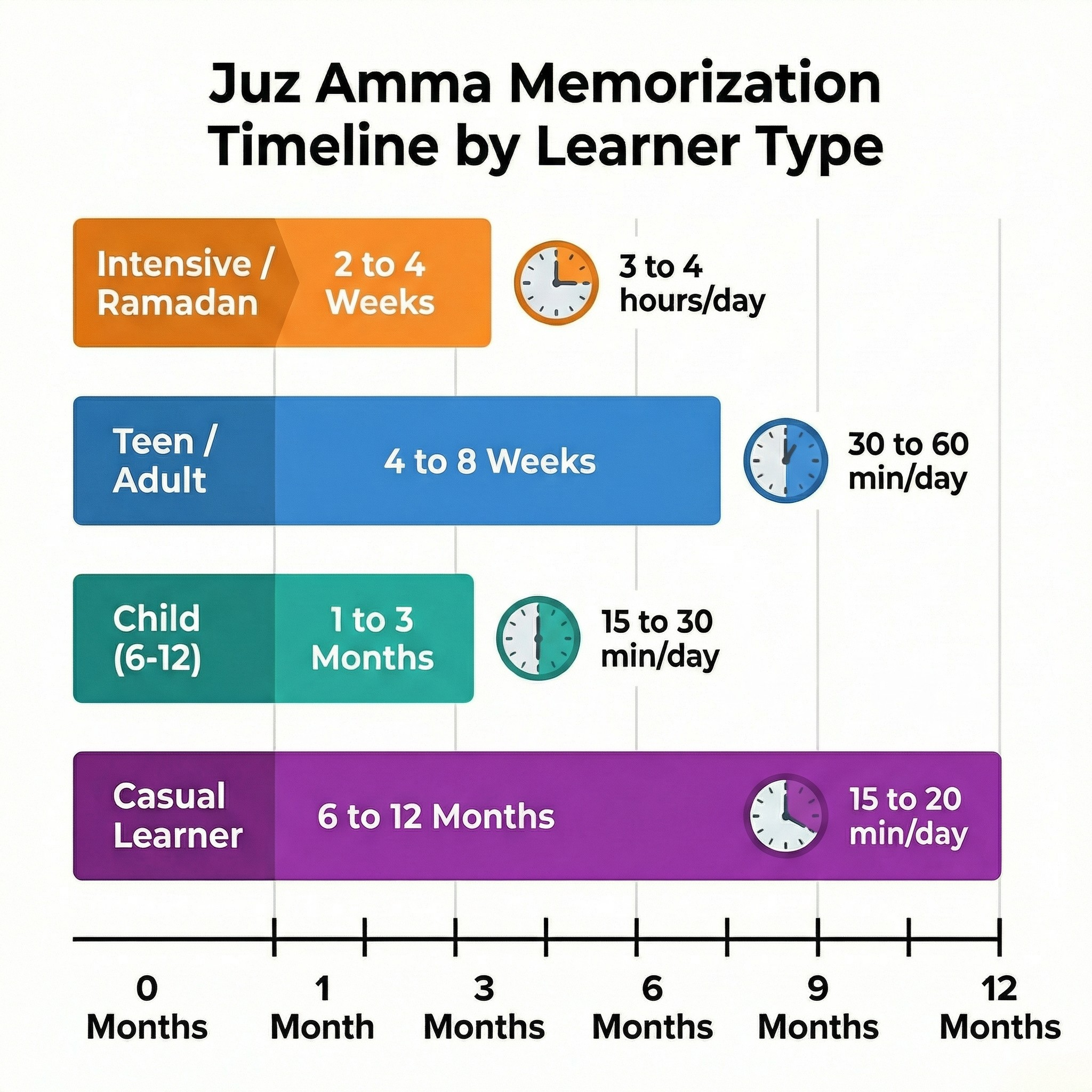
Most children complete Juz Amma in 1 to 3 months. Adults typically finish in 4 to 8 weeks with 30 to 60 minutes of daily practice.
These figures come from structured hifz programs. Individual results vary based on prior Arabic exposure, Tajweed proficiency, and consistency of daily study.
| Learner Profile | Typical Completion Time | Daily Study Time |
| Children (ages 6-12) | 1 to 3 months | 15 to 30 minutes |
| Teens and Adults | 4 to 8 weeks | 30 to 60 minutes |
| Intensive or Ramadan Plan | 2 to 4 weeks | 3 to 4 hours |
| Casual or Part-Time | 6 to 12 months | 15 to 20 minutes |
The Two-Verse Rule is a practical minimum recommended by senior hifz teachers worldwide. On days when work, family, or fatigue reduce study time, never skip the habit entirely. Memorize or review at least two verses. This sounds small. The effect is significant. It keeps the neural habit loop active and prevents the “restart cost” from compounding after a break.
Hifz teachers who work with busy adults consistently report that students who follow the Two-Verse Rule on difficult days complete the juz at nearly the same rate as those who study for full sessions daily. Consistency beats intensity over any two-month period.
If you want a structured program with certified Egyptian instructors who design a personal schedule around your life, Rayhaan School’s Online Hifz Program offers one-on-one sessions for both children and adults, with a free trial class to start.
Which Surahs in Juz Amma Are the Hardest to Memorize?
The hardest surahs in Juz Amma are An-Naba, Abasa, Al-Mutaffifin, and Al-Bayyinah because they contain longer verses and Mutashabihat patterns that are easy to confuse.
Mutashabihat refers to verses across different surahs that sound phonetically similar. Students frequently mix up these verses during recitation, especially when they memorize multiple surahs in sequence without dedicated differentiation practice.
The four most commonly confused pairs in Juz Amma are:
Pair 1: At-Takwir (81) and Al-Infitar (82) Both open with vivid cosmic imagery using similar grammatical structure. Verse-by-verse, the rhythm feels nearly identical in the early sections.
Pair 2: Al-Ghashiyah (88) and Al-A’la (87) Both describe paradise and punishment in alternating patterns. Students often transpose verses between the two during early review.
Pair 3: An-Naba (78) and An-Nazi’at (79) As the two longest surahs in the juz and the first two in sequence, these share thematic and rhythmic overlap. Studying them back-to-back without differentiation deepens the confusion.
Pair 4: Al-Bayyinah (98) and At-Takathur (102) Both are short but contain Arabic phonetic patterns that non-native speakers find difficult to distinguish reliably without Tajweed training.
The solution is thematic visualization. Attach a distinct mental image to the opening theme of each surah before memorizing it. An-Naba is “the great news.” An-Nazi’at is “the stars being pulled.” These images anchor each surah in memory as a separate item, reducing cross-contamination.
What Are the Best Methods for Memorizing Juz Amma?
The most effective Juz Amma memorization method combines the Sabak-Sabqi-Manzil daily cycle with the 10/10 repetition technique and consistent revision at a 50/50 ratio.
Four named methods are used in formal hifz programs globally.

Method 1: The Sabak-Sabqi-Manzil System (Traditional Madrasa Method)
This three-phase daily cycle is the backbone of formal Islamic academies and has been refined over centuries.
- Sabak (New Lesson): Memorize new material in the morning, ideally after Fajr. Aim for 3 to 5 verses per session for beginners.
- Sabqi (Recent Review): In the afternoon, recite material memorized in the previous 15 to 20 days. This keeps fresh memory stable before it moves to long-term storage.
- Manzil (Deep Revision): Recite completed sections in a rolling weekly cycle. Once the full juz is memorized, most teachers recommend reciting the entire Juz Amma twice per week as Manzil.
The critical number here is the revision ratio. Experts consistently identify the minimum effective ratio as 50% new memorization to 50% revision. Most struggling students spend 90% of their time on new material and almost nothing on revision. That is why they forget.
Method 2: The 10/10 Technique (Best for Adult Self-Study)
- Read the verse 10 times with eyes on the Mushaf.
- Close the Mushaf and recite the verse 10 times from memory.
- If an error occurs during the memory phase, reset the count to 1.
- After two verses, combine them and recite 5 times in sequence.
The reset rule is not punishment. It prevents the brain from encoding a “close enough” version of the verse, which becomes extremely difficult to correct once it is locked in memory.
Method 3: The Ottoman Stacking Method (Best for Beginners and Children)
Start from the last surah in Juz Amma (An-Nas, Surah 114) and work backward toward An-Naba (Surah 78).
The shortest and easiest surahs are at the end of the juz. Beginning there means every new surah is automatically stacked on top of already-reviewed material. The student is never starting from zero. The hardest surahs (the long ones at the beginning) are tackled last, when Tajweed confidence and memory stamina are at their peak.
Method 4: The Singapore Circle Method (Best for Group Settings)
Students who have memorized the juz sit in a circle. Each student recites one verse in sequence. A student who makes three errors sits out for individual review. The group continues until the full juz is completed without errors.
This method creates social accountability. Research on habit formation consistently identifies peer accountability as among the most powerful sustained motivators available to adult learners.
What Does Science Say About Quranic Memorization?
Science shows that Quranic memorization elevates BDNF levels, strengthens long-term memory, and is most effective when practiced after Fajr and reviewed before sleep.
These findings come from documented clinical and neuroscience research on memorization of rhythmic sacred texts.
Finding 1: BDNF and Neuroplasticity Regular Quranic memorizers show significantly elevated levels of Brain-Derived Neurotrophic Factor (BDNF). BDNF is a protein that promotes the survival and growth of neurons. Higher BDNF levels directly correlate with stronger long-term memory and reduced risk of age-related cognitive decline. Memorizing Juz Amma is, by measurable biological metrics, good for the brain at any age.
Finding 2: The Fajr Window Studies into human circadian rhythms show that cortisol levels peak in the early morning hours, immediately after waking. Cortisol, in moderate levels, sharpens encoding capacity in the prefrontal cortex. Approximately 70% of experienced memorizers report their most productive sessions occurring after Fajr. This aligns with the traditional madrasa practice of assigning new Sabak in the morning, which is a practice that now has clinical support.
Finding 3: Pre-Sleep Review The brain’s hippocampus replays and consolidates neural sequences during REM sleep. Material reviewed immediately before sleeping is statistically more likely to be retained. A 5-minute review of that day’s new verses just before bed is one of the highest-leverage habits any memorizer can build.
Finding 4: Semantic Scaffolding Students who learn the meaning of key words in each surah show dramatically lower rates of memory decay than those using pure phonetic repetition. Learning even five word-level translations per surah creates what neuroscientists call “semantic hooks.” The brain has more pathways to retrieve the verse, making it more stable over time.
What Are the Most Common Mistakes People Make When Memorizing Juz Amma?
The four most common mistakes are: confusing reading with memorizing, ignoring revision, delaying Tajweed correction, and cramming after a break.
Mistake 1: The Visual Mirage
Many beginners read a verse 15 times with the Mushaf open and feel they have memorized it. The brain has memorized the act of reading, not the verse itself. True encoding requires closing the Mushaf and forcing retrieval from memory. No retrieval practice, no memory.
Mistake 2: The Revision Imbalance
Spending 90% of study time on new material and 10% on revision guarantees forgetting. The minimum sustainable ratio is 50/50. Students who ignore this spend their first three months memorizing and their next three months re-memorizing the same material.
Mistake 3: Tajweed Procrastination
Memorizing with incorrect pronunciation with the plan to “fix it later” is among the most costly errors in hifz. Once an error is encoded in memory, it requires approximately ten times the effort to unlearn and replace. Tajweed must be accurate from the first repetition. This is non-negotiable.
Mistake 4: The Sprint-and-Crash Pattern
Memorizing five surahs in one weekend after skipping ten days of practice is a classic pattern. Cramming fills short-term working memory. Short-term working memory has a decay rate measured in hours, not weeks. Consistent daily sessions of even 20 minutes produce exponentially more stable long-term memory than irregular intensive bursts.
What Is the Significance of the Three Quls in Juz Amma?
The Three Quls are Surahs Al-Ikhlas (112), Al-Falaq (113), and An-Nas (114). The Prophet prescribed their daily recitation for protection and as a foundational act of worship.
The name “Three Quls” comes from the opening word of each: “قُلْ” (Qul) — meaning “Say.” Each surah is a divine command to the Prophet and, through him, to every believer: to declare a specific truth about Allah.
The Prophet Muhammad (peace be upon him) said:
«قُلْ هُوَ اللَّهُ أَحَدٌ، وَالْمُعَوِّذَتَانِ، حِينَ تُمْسِي وَحِينَ تُصْبِحُ ثَلَاثَ مَرَّاتٍ تَكْفِيكَ مِنْ كُلِّ شَيْءٍ» “Qul Huwallahu Ahad, wal-mu’awwidhatayn, hina tumsi wa hina tusbih, thalatha marratin takfikak min kulli shay'” “Recite Al-Ikhlas and the two Mu’awwidhatan (Al-Falaq and An-Nas) three times in the evening and three times in the morning. They will suffice you against everything.” (Sunan Abu Dawud, 5082; classified as Sahih)
These three surahs together form a complete theological statement. Al-Ikhlas affirms the absolute oneness of Allah. Al-Falaq seeks protection from external harms. An-Nas seeks protection from internal, spiritual harms. For a new memorizer, learning these three surahs first is therefore not only educationally practical, but spiritually complete.
Frequently Asked Questions About Juz Amma
How many surahs are in Juz Amma?
Juz Amma contains 37 surahs, from Surah An-Naba (78) to Surah An-Nas (114), totaling 564 verses.
What surah starts Juz Amma?
Juz Amma begins with Surah An-Naba (Surah 78), which opens with the verse “Amma yatasā’alūn” (About what are they asking?).
What is the last surah of Juz Amma?
The last surah of Juz Amma is Surah An-Nas (Surah 114), which has 6 verses and asks for Allah’s protection from the whisperings of Shaytan.
Which surah in Juz Amma has the most verses?
Surah An-Nazi’at (Surah 79) has the most verses in Juz Amma, with 46 verses total.
Which is the shortest surah in Juz Amma?
Three surahs share the title of shortest: Al-Asr (103), Al-Kawthar (108), and An-Nasr (110), each with only 3 verses.
Should children memorize Juz Amma from front to back or back to front?
Back to front is the preferred approach for children. Starting from An-Nas (114) and moving backward gives children immediate wins with shorter surahs and builds momentum before tackling the longer chapters.
Can an adult with no Arabic background memorize Juz Amma?
Yes. Millions of non-Arabic speakers have memorized Juz Amma successfully. The prerequisite is correct Tajweed, which must be learned from a qualified teacher. Understanding word meanings helps retention significantly and is recommended from the start.
Is Juz Amma enough for all five daily prayers?
Yes. Juz Amma contains enough surahs to recite a different one in every rak’ah of every prayer for days without repetition. It is the primary source of prayer recitation material for most Muslims globally.
Start Your Juz Amma Journey Today
Juz Amma is 37 surahs, 564 verses, and 14 centuries of daily recitation. It has been on the lips of Muslims in every generation, on every continent, in every era. It is the most recited, most lived-with, most loved section of the Quran.
The path to memorizing it is clear:
- Use the table in this guide as your navigation map.
- Pick a method that fits your lifestyle and age group.
- Get your Tajweed right from day one, before any memorization begins.
- Revise at least as much as you memorize. The 50/50 rule is not optional.
- Trust the compound effect of small, consistent daily effort.
If you want a structured program with qualified, Al-Azhar certified Egyptian teachers, a personalized schedule, and one-on-one accountability, Rayhaan School’s Online Hifz Program is designed exactly for this journey. A free trial class is available with no commitment required.